Most conversations about African art and the environment treat climate as a subject—something artists depict, comment on, or warn against. But across the continent, weather and geography have long shaped how art gets made, what it’s made from, how long it survives, and how it’s read. The climate doesn’t just appear in the work; it’s often a collaborator in making it.
Consider the Great Mosque of Djenné in Mali, built from banco—clay, water, and rice husks drawn from the Bani River’s floodplain.
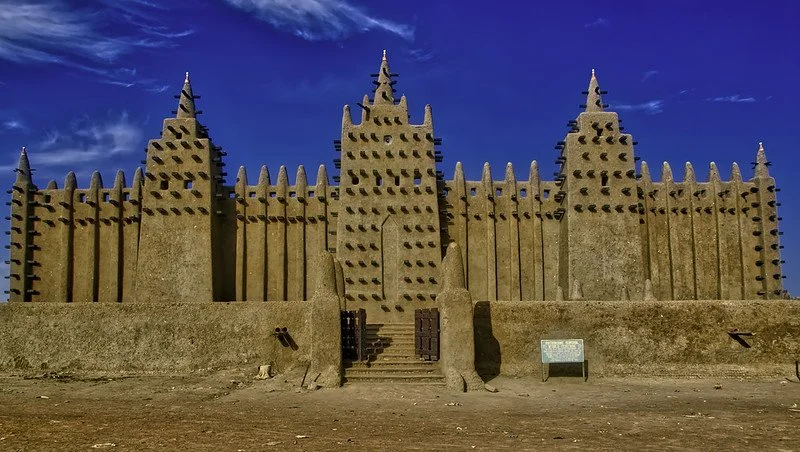
The clay cracks as it dries, but when the rains come, it swells again and seals those cracks. The maintenance calendar follows the weather itself: every year, thousands of Malians gather to replaster the mosque before the rainy season, a ritual called the Crépissage that residents describe as the biggest event in Djenné’s calendar. Remarkably, the annual layers of plaster create a visible record of a building’s age, much like growth rings on a tree—environmental memory embedded literally in the walls.
This relationship between place, material, and process runs through contemporary practice too, even when the materials look nothing like clay. In this digest, we’ll look at how landscape shapes visual language, how artists respond to ecological change without resorting to doom narratives, and how museums and heritage sites across Africa are adapting to the climates they sit within.
When Landscape Shapes Visual Language
If you spend time looking at how colour, form, and composition vary across African contemporary art, you start to notice that these aren’t just stylistic preferences floating free of place. They often carry the imprint of specific landscapes and the light, colour, and texture those landscapes produce.
Aïda Muluneh’s photography is a useful entry point here. Her breakout series “The World is 9” is instantly recognisable for its vibrant colours, bold compositions, and rich symbolism, with models in face paint set against stark, often desert-like environments. According to Britannica, the vivid reds, yellows, and blues in her work serve as a nod to Ethiopia, reflecting the colours frequently seen in church wall paintings, especially during the Gondarine period.
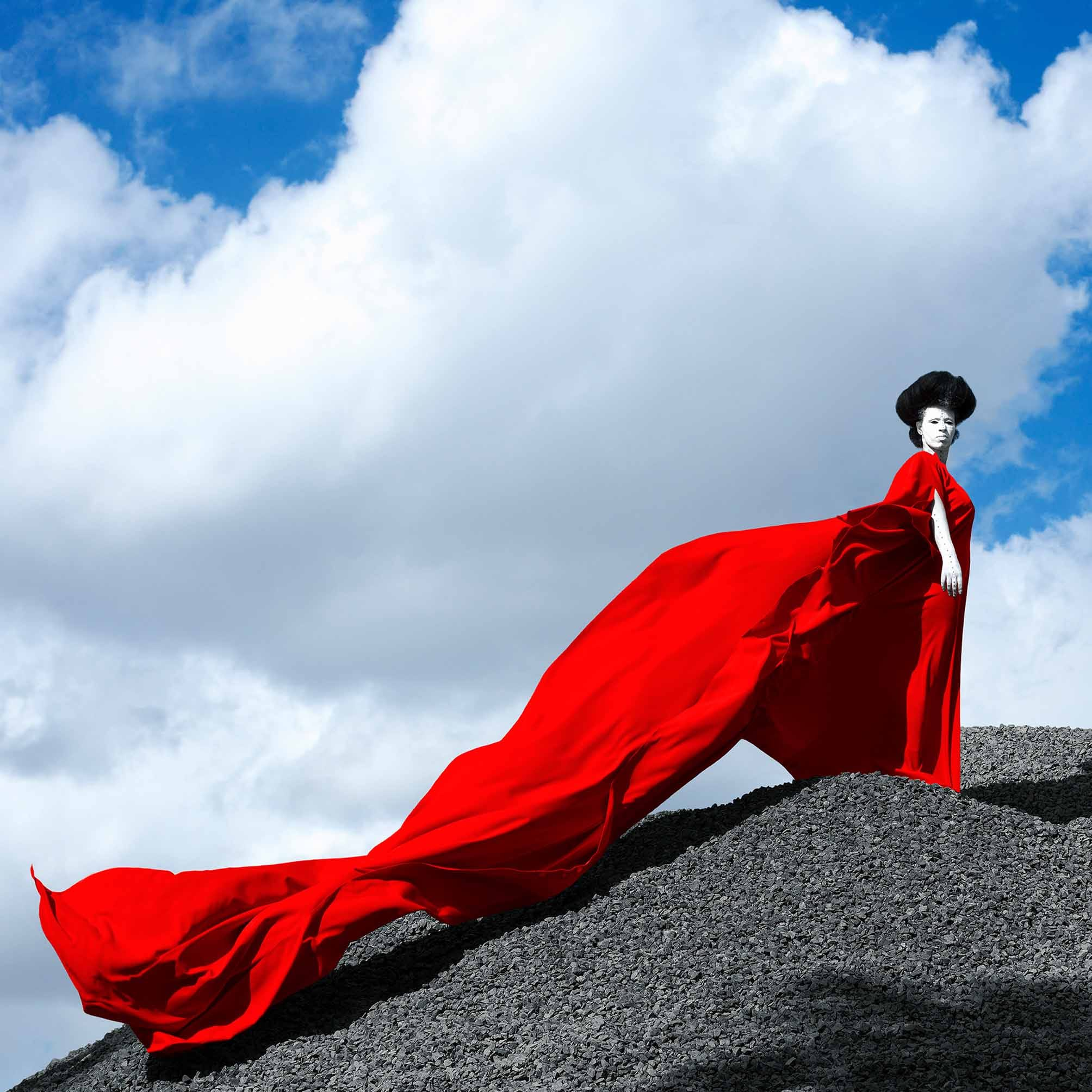
What is notable is how Muluneh has talked about colour as something that moved with her practice—the prevalence of primary colours is described as a natural progression from her earlier black-and-white photojournalism, suggesting a kind of visual evolution where Ethiopian light, ritual colour, and personal history all converge.
Artists Responding to Ecological Change
Some artists engage environmental change not as a backdrop but as the central organising idea of a body of work—and the strongest examples avoid simply illustrating a crisis; they construct a visual argument about it.
Fabrice Monteiro’s “The Prophecy” is probably the most widely circulated example of this from West Africa. Working with Senegalese costume designer Doulsy and the Ecofund organisation, Monteiro photographed performers in elaborate costumes built from trash—soda cans, garbage bags, fishing nets, and tortoise shells—staged across ten of Senegal’s most environmentally degraded sites. The conceptual framing draws on West African spiritual traditions: Monteiro has described the project as combining animism and ecology, with composite characters inspired by West African masquerade traditions emerging from oil slicks, garbage dumps, and burnt landscapes to deliver a message of warning and accountability.
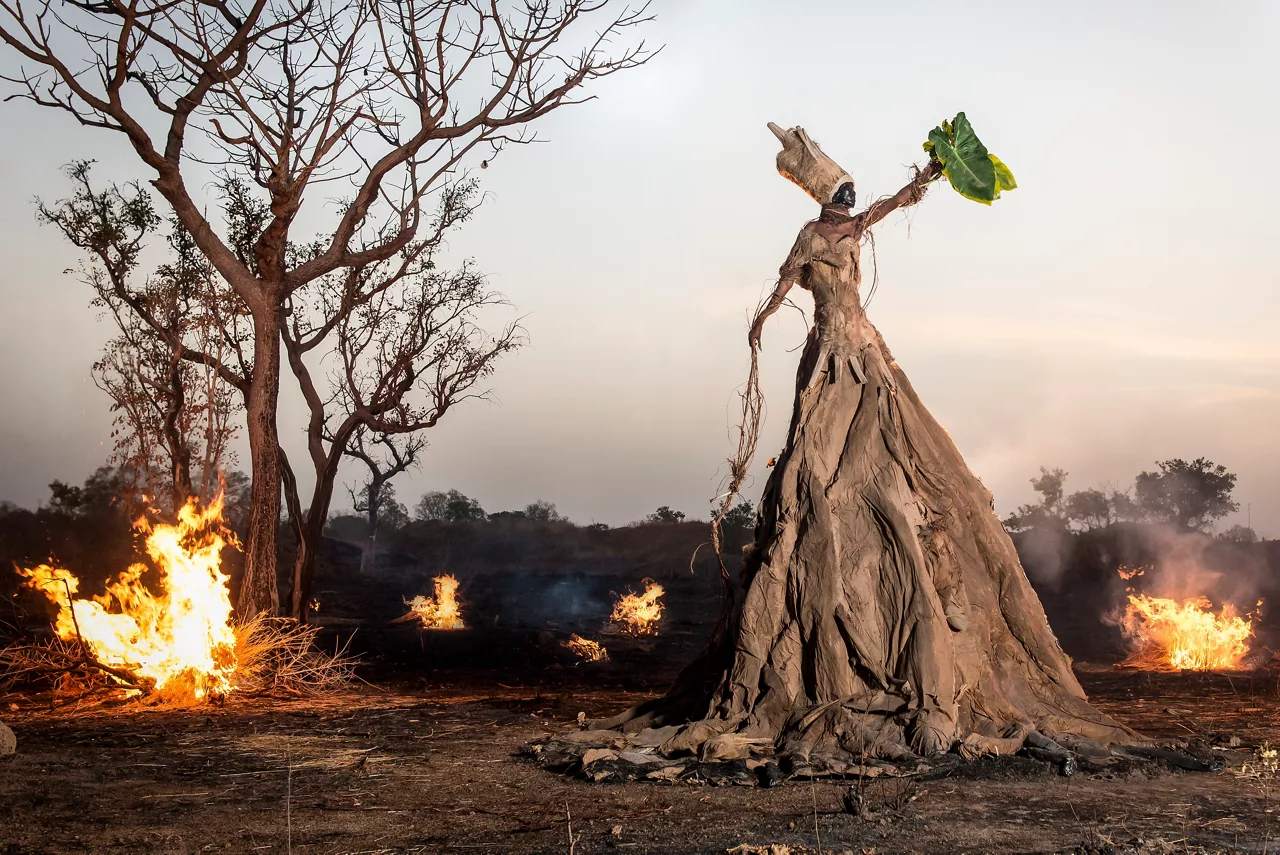
What separates this from straightforward environmental photojournalism is the collaborative, almost civic structure behind it. The project involved researchers, activists, artists, local citizens, and political decision-makers, pairing the surreal photographs with scientifically grounded captions developed with a University of Dakar researcher.
Climate and the Future of African Art Spaces
The institutions that hold, exhibit, and conserve art across Africa are themselves operating within environmental constraints that shape what’s possible—constraints that differ meaningfully from the climate-controlled “white box” model that dominates museum thinking in temperate countries.
Conservation science has, to its credit, started to acknowledge this directly. Published environmental guidelines for museums increasingly take a more holistic approach by accounting for local conditions—recognising that it may not be possible or appropriate for a museum located in the tropics to maintain an environment more typical of temperate regions. This is a meaningful shift from older conservation orthodoxy, which often imported standards—like the Smithsonian’s own benchmark of 70 degrees Fahrenheit with 45 per cent relative humidity—that were calibrated for climates very different from much of Africa’s.
Zeitz MOCAA in Cape Town, opened in 2017 as the largest museum of contemporary art from Africa and its diaspora, located in a converted grain silo at the V&A Waterfront, operates within a coastal climate that brings its own humidity and salt-air considerations for a building of that scale and history. The Museum of African Contemporary Art Al Maaden in Marrakesh adds an interesting layer to this conversation simply through the circumstances of its founding: it opened in November 2016 on the occasion of the United Nations Climate Change Conference held in that city.
Where This Leaves Us
What ties these examples together isn’t a single argument about climate “influencing” art, as if environment were an external force acting on a separate thing called culture. It’s closer to the opposite: art and environment have never really been separate categories in the first place. The masons in Djenné reading the rains to time their replastering and Muluneh’s colour palette carrying the memory of church murals and desert light—these aren’t artists working around environmental conditions. They’re artists working with them, through them, and sometimes against them, but always in conversation with them.
Maybe the more useful question isn’t “How does climate affect African art?” but something closer to: What would it mean to look at any artwork, anywhere, and ask what role the ground it stands on, the materials it was built from, and the weather it has survived actually played in making it what it is? That’s a question that doesn’t have a tidy answer, which is probably why it’s worth sitting with a while longer.